


Offshore Exhaust Gas Cleaning: Looking Beyond Emissions Compliance
When discussing offshore exhaust gas cleaning, the conversation often revolves around emissions limits, NOx reduction, and increasingly, CO₂. These are important topics, particularly as the offshore industry continues its efforts to improve environmental performance.
However, when it comes to the daily reality onboard offshore installations, another aspect deserves equal attention: air quality in the working environment.
Personnel working on drilling rigs, production platforms, and offshore energy installations can be exposed to exhaust gases, especially when engine exhaust outlets are located close to work areas or when changing wind conditions carry exhaust fumes across the installation. In these situations, the challenge is not only regulatory compliance.
It is also about creating a safer and more comfortable working environment for the people operating these facilities every day.
This is where a broader approach to offshore exhaust gas cleaning becomes relevant.
CO₂ Reduction Is Not the Same as Improved Air Quality
The offshore industry is placing significant focus on reducing greenhouse gas emissions. While CO₂ remains a key indicator of climate impact, it is not necessarily a useful measure of how exhaust gases affect local air quality or the working environment onboard an installation.
Exhaust streams from diesel engines can contain a range of substances, including:
- Nitrogen oxides (NOx)
- Carbon monoxide (CO)
- Unburned hydrocarbons (HC)
- Odour-causing compounds
Some of these substances may not be visible, yet they can still influence how exhaust gases are perceived by personnel working nearby.
As a result, improving air quality onboard offshore facilities often requires a broader view than CO₂ reduction alone.

SCR Technology: An Established Solution for NOx Reduction
Selective Catalytic Reduction (SCR) systems have become a well-established technology for reducing NOx emissions from offshore diesel engines and power generation systems.
In an SCR system, a reducing agent is introduced into the exhaust stream before it passes through the catalyst. The catalyst facilitates a reaction that converts nitrogen oxides into nitrogen and water vapour.
For many offshore operators, SCR technology is already a familiar and proven component of their emissions strategy.
However, while SCR systems are highly effective at reducing NOx, they are not specifically designed to address every component present in the exhaust gas stream.
The Role of a Diesel Oxidation Catalyst (DOC)
A Diesel Oxidation Catalyst (DOC) addresses a different set of challenges within the exhaust stream.
Using catalyst materials such as platinum or palladium, a DOC promotes oxidation reactions that help convert certain pollutants into less harmful compounds.
A DOC can contribute to:
- Reduction of carbon monoxide (CO)
- Reduction of unburned hydrocarbons (HC)
- Oxidation of compounds associated with exhaust odours
In practical terms, this means the exhaust gas can become cleaner not only from an emissions perspective but also in terms of the environment experienced by personnel onboard.
Why Combining SCR and DOC Creates Additional Value
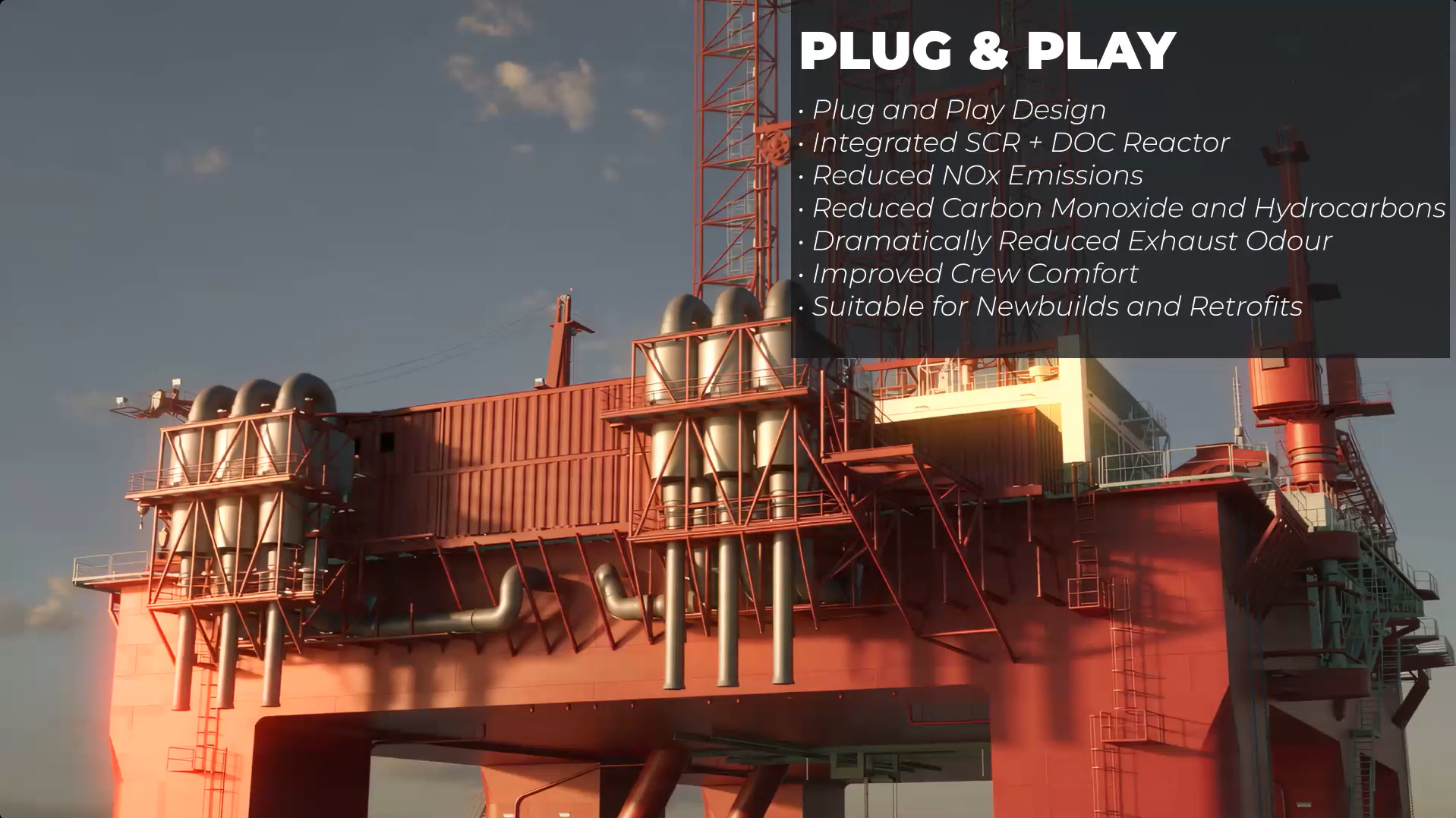
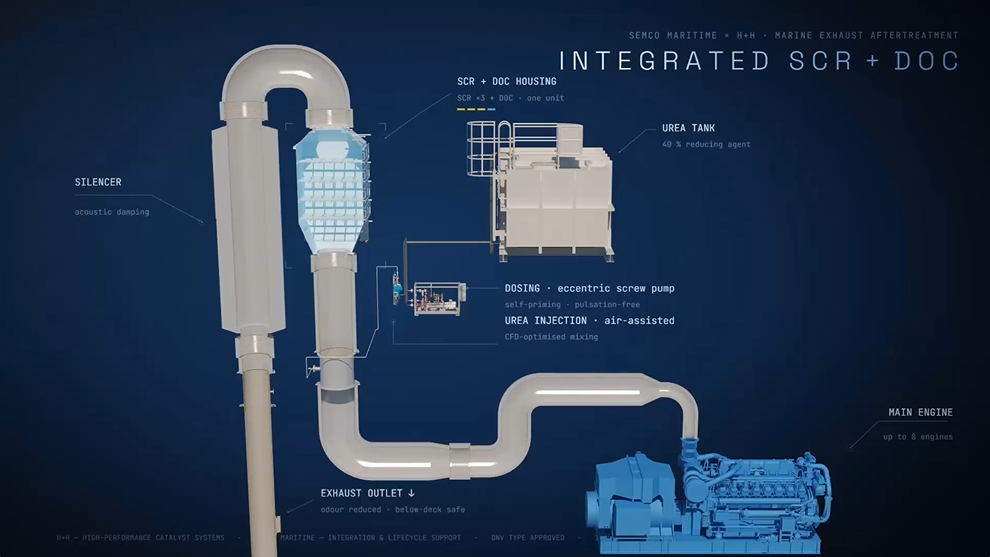
Offshore exhaust treatment systems have traditionally focused on specific emissions targets. Integrating a DOC directly into an SCR reactor creates an opportunity to address multiple aspects of exhaust gas quality within one coordinated solution.
By combining the technologies in a single integrated reactor, operators may benefit from:
- NOx reduction through SCR technology
- Reduction of carbon monoxide and hydrocarbons
- Reduced exhaust odour
- Compact system design
- Simplified integration
- Suitability for both newbuild and retrofit projects
In addition to technical performance, integration can help simplify project execution by reducing the complexity associated with installing multiple separate exhaust treatment components.
From Compliance to Crew Comfort
Offshore operators have always placed a strong emphasis on safety, health and working conditions. Increasingly, exhaust gas treatment is being recognised as a contributor to these objectives beyond regulatory compliance alone.
When wind conditions change, exhaust gases may drift across deck areas where personnel are working. Even where emissions requirements are fulfilled, reducing odours and improving perceived air quality can positively influence the everyday experience of crews working in these environments.
This highlights an important shift in perspective:
Effective offshore exhaust gas cleaning is not only about what leaves the exhaust stack. It is also about how exhaust emissions affect people and operations onboard.
A Practical Offshore Application
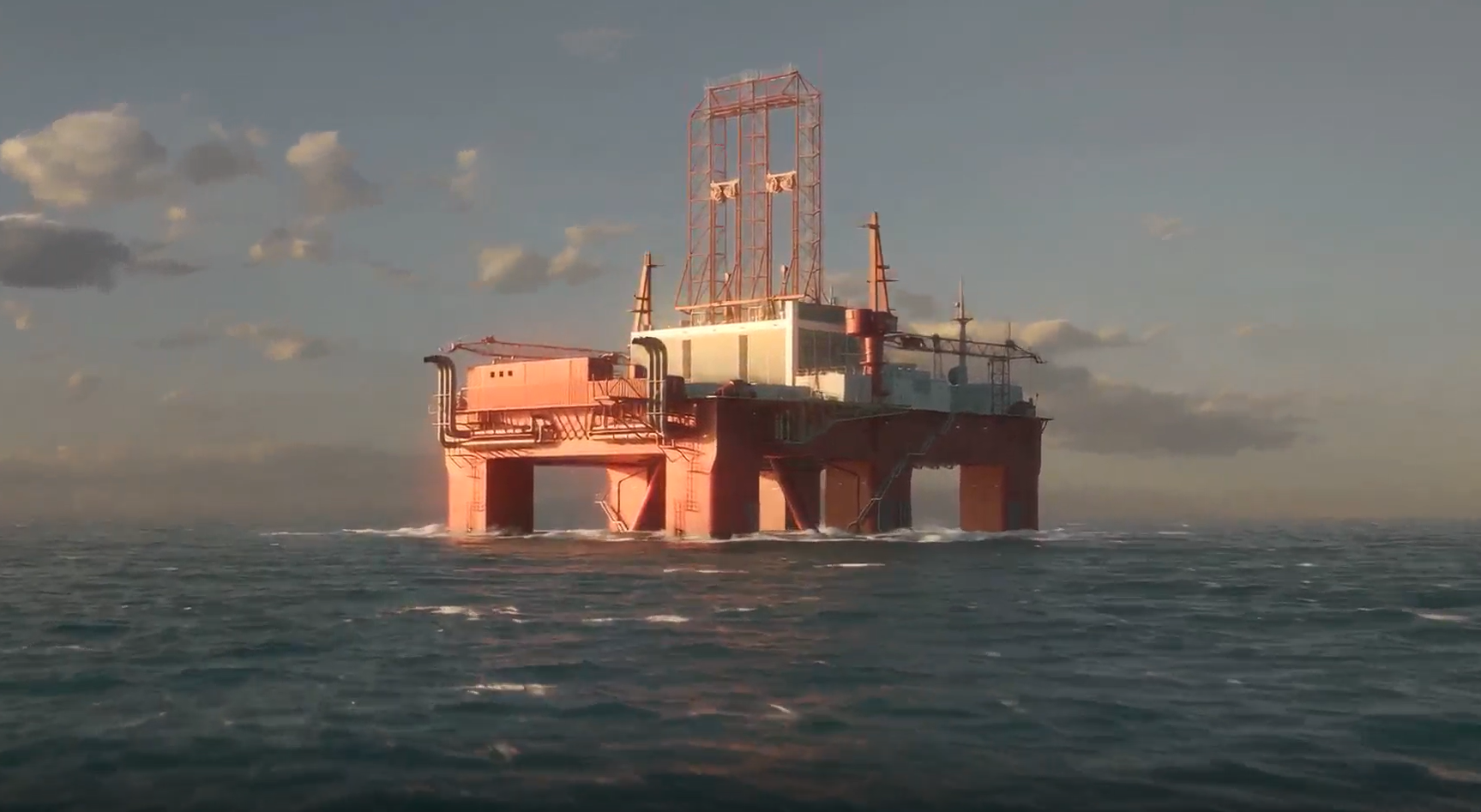
A recent offshore installation demonstrates the potential of this integrated approach.
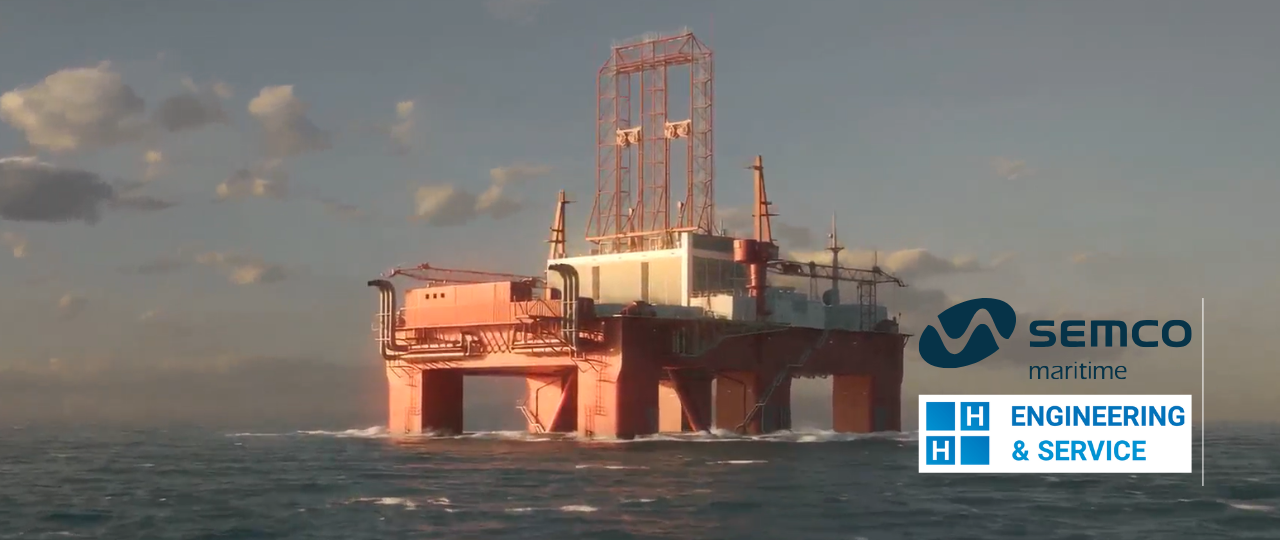
In this project, SCR and DOC technologies were combined within a compact plug-and-play solution developed through the collaboration between Semco Maritime and H+H.
The objective was not only to support emission reduction efforts but also to address challenges related to exhaust odours and working conditions on the installation.
Operational experience from the project indicated that the integrated solution contributed to cleaner exhaust characteristics and a noticeable reduction in odour-related concerns, supporting a more comfortable working environment for personnel onboard.
While every installation is different, the project illustrates how exhaust gas treatment systems can deliver benefits that extend beyond compliance requirements alone.
Technology Expertise Meets Offshore Understanding
The most effective offshore solutions are rarely created through technology expertise alone.
They emerge when technical knowledge is combined with a deep understanding of how offshore facilities are designed, operated and maintained, as well as how they are experienced by the people working onboard.
The collaboration between H+H and Semco Maritime reflects this philosophy. By combining expertise in catalyst technology, SCR systems and offshore integration, the two companies have developed an approach that addresses both emission control and operational realities.
The result is not simply another SCR system.
It is a more holistic approach to offshore exhaust gas cleaning.
The Future of Offshore Exhaust Gas Cleaning
As the offshore sector continues to evolve, operators will increasingly evaluate exhaust treatment systems based on multiple criteria:
- Environmental performance
- Operational efficiency
- Installation complexity
- Retrofit suitability
- Air quality considerations
- Crew comfort and working environment
Integrated SCR and DOC solutions represent an important step in this direction, helping operators address both emissions and human factors within a single exhaust gas treatment concept.
Because ultimately, cleaner exhaust is not only about meeting limits.
It is about creating better conditions for the people who work offshore every day.
Frequently Asked Questions
What is the difference between an SCR system and a Diesel Oxidation Catalyst?
An SCR system is primarily designed to reduce NOx emissions, while a Diesel Oxidation Catalyst (DOC) targets pollutants such as carbon monoxide and unburned hydrocarbons and can help reduce exhaust odours.
Why is reducing CO₂ not the same as improving air quality?
CO₂ is an important greenhouse gas indicator, but local air quality is also influenced by substances such as carbon monoxide, hydrocarbons and odour-causing compounds that may affect working conditions onboard.
How can a Diesel Oxidation Catalyst help reduce exhaust odours?
A DOC promotes oxidation reactions that convert certain exhaust components into less harmful substances, helping reduce compounds associated with exhaust odours.
Can integrated SCR and DOC systems be installed in retrofit projects?
Yes. Integrated systems can be designed for both newbuild and retrofit applications, depending on project requirements and available installation space.
What are the advantages of a plug-and-play exhaust gas cleaning system?
A plug-and-play approach can simplify installation, reduce integration complexity and help streamline project execution compared with installing multiple separate treatment systems.
Talk to Our Experts
Whether you are planning a newbuild project or evaluating retrofit options, our specialists can help assess how integrated SCR and DOC solutions may contribute to your emission reduction strategy while supporting improved offshore working conditions.
Get in touch with H+H to discuss your project requirements.